As the popularity of cryptocurrencies continues to grow, so does the sophistication of the threats targeting them.
Unlike traditional financial assets, cryptocurrencies and other blockchain-based assets are not protected by bank guarantees or other established financial security measures. This makes it imperative for investors to take every possible precaution to safeguard their digital wealth. In this guide, we’ll walk you through four key tips for securely storing cryptocurrencies and protecting your crypto assets.
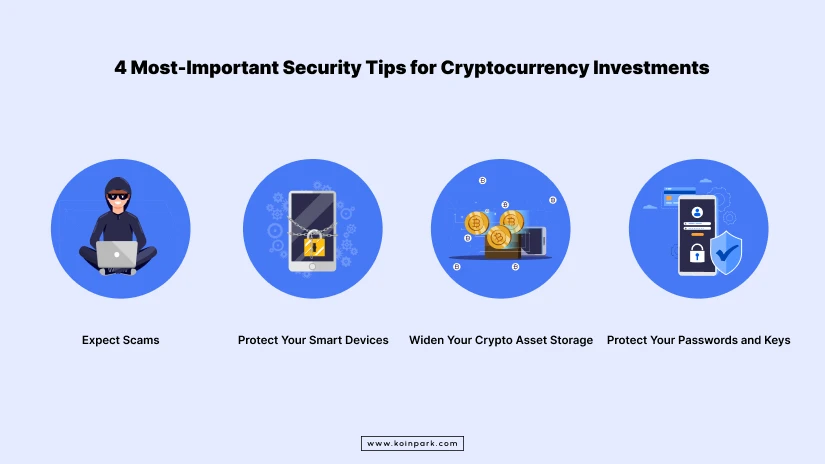
#1 Expect Scams
The decentralized and often unregulated nature of the cryptocurrency market makes it a prime target for scammers.
These fraudulent schemes can vary widely, but they all aim to separate you from your hard-earned crypto. As a crypto investor, it’s crucial to exercise extreme caution and maintain a healthy dose of skepticism, much more than you would in traditional financial transactions.
Common Cryptocurrency Scams
- Giveaway Scams: Fraudsters often lure victims with promises of super-profitable investments, purportedly through an “investment fund,” “experienced manager,” or even a “celebrity endorsement.” These scams vary; some criminals disappear after the initial payment, while others provide small returns to build trust before taking off with a larger investment.
- Value Inflation Scams: These involve investing in seemingly promising new coins or tokens whose value is artificially inflated. The catch? When you try to cash out, you find it’s impossible, leaving you with worthless tokens.
- Romance Scams: Scammers target victims on dating platforms, building a romantic relationship before introducing the idea of a lucrative investment opportunity. Once trust is established, the scam unfolds like a typical investment fraud.
- Fake Cryptocurrency Exchanges: These are classic phishing schemes adapted for the crypto world. Scammers create fake exchanges or investment platforms to steal your crypto wallet details, leading to the loss of your assets.
Protection Methods
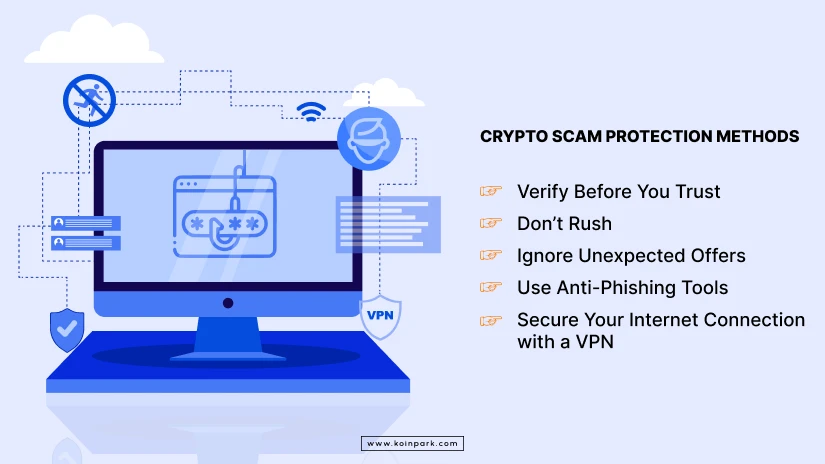
- Verify Before You Trust: Always double-check the legitimacy of any firm, individual, or website offering to help you invest. Look for verified reviews and perform background checks.
- Don’t Rush: Scammers often push victims to make quick decisions. Take your time to thoroughly investigate any new investment opportunity.
- Ignore Unexpected Offers: Be wary of unsolicited investment offers, whether they come via social media, email, or instant messaging. If you didn’t seek out the offer, it’s likely a scam.
- Use Anti-Phishing Tools: Ensure your devices are protected with anti-phishing software. This is essential to block access to fake websites designed to steal your information.
- Secure Your Internet Connection with a VPN: A VPN won’t protect you from all threats, but it will shield you from website spoofing and spying, particularly when using public Wi-Fi. Choose a VPN that’s fast and reliable, with servers worldwide.
You may also like: Types of Cryptocurrency Scams
#2 Protect Your Smart Devices
Scammers don’t always need to rely on social engineering to steal your crypto; sometimes, they use malware to infiltrate your devices. Once they have access, they can execute a range of malicious activities:
How Malware Targets Your Crypto
- Password Interception: Malware can capture passwords as they are entered, or hijack your session directly from the browser, allowing scammers to gain access to your cryptocurrency accounts.
- Address Manipulation: During a crypto transaction, malware can alter the recipient’s wallet address at the last moment, redirecting funds to the attacker’s wallet.
- Cryptojacking: This involves installing a miner on your device, which quietly mines cryptocurrency using your system’s resources. This often goes unnoticed, slowly draining your system’s performance over time.
- Fake Apps: Trojans disguised as legitimate cryptocurrency apps can steal your funds as soon as they’re installed.
Protection Methods
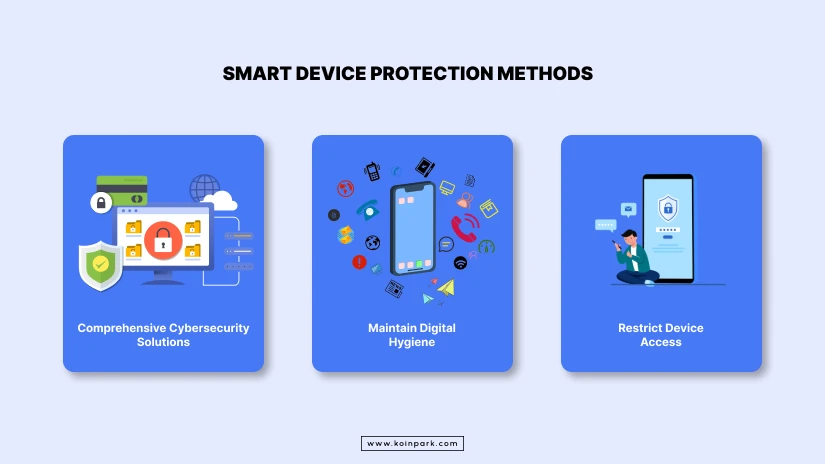
- Comprehensive Cybersecurity Solutions: Invest in a robust cybersecurity solution that includes application behavior monitoring, high malware detection rates, and specialized protection for financial transactions.
- Maintain Digital Hygiene: Only download apps from official sources and avoid using cracked software, which is a common vector for malware.
- Restrict Device Access: Limit access to your devices, especially those used for cryptocurrency transactions. Use strong passwords and enable automatic locking features.
#3 Widen Your Crypto Asset Storage
Storing large amounts of cryptocurrency in online wallets or on internet-connected devices (hot wallets) may be convenient, but it also increases the risk of theft. For those managing significant crypto investments, it’s wise to spread your assets across different types of crypto wallets.
Cold Wallets vs. Hot Wallets
- Hot Wallets: These are online wallets connected to the internet, suitable for frequent transactions. However, their constant online presence makes them vulnerable to hacking.
- Cold Wallets: These are offline wallets, typically hardware devices resembling USB sticks, used to store the bulk of your assets securely. Since they’re disconnected from the internet, they’re much harder to hack.
Protection Methods for Cold Wallets
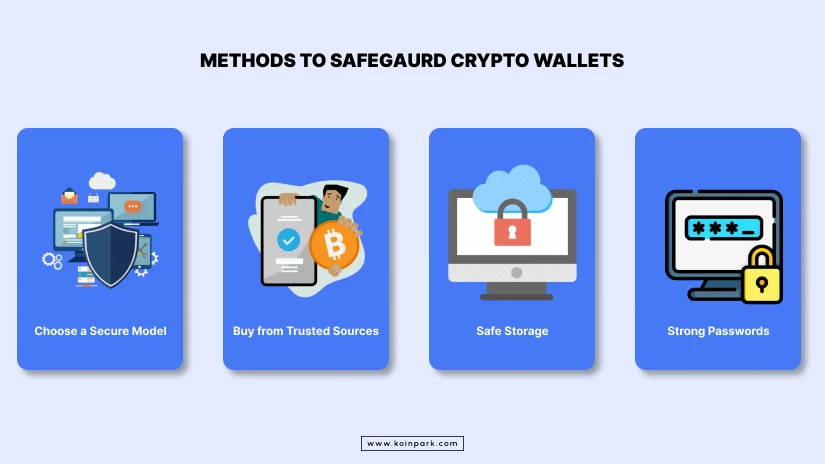
- Choose a Secure Model: Research the security of different cold wallet models. Look for information on any known vulnerabilities or security assessments.
- Buy from Trusted Sources: Only purchase cold wallets from reputable sellers to avoid counterfeit devices that could compromise your assets.
- Safe Storage: Store your cold wallet in a secure location, such as a safe deposit box or a home safe. Consider risks like theft, fire, or natural disasters.
- Strong Passwords: Create a long, unique password for your wallet. Ensure that it’s both secure and memorable, as losing your password could mean losing access to your assets.
#4 Protect Your Passwords and Keys
This is the last line of your defense.
The fear of losing access to their crypto wallets keeps many crypto owners up at night. A secure password or seed phrase is your last line of defense against unauthorized access. Following best practices in password management is crucial to protecting your crypto.
Protection Methods
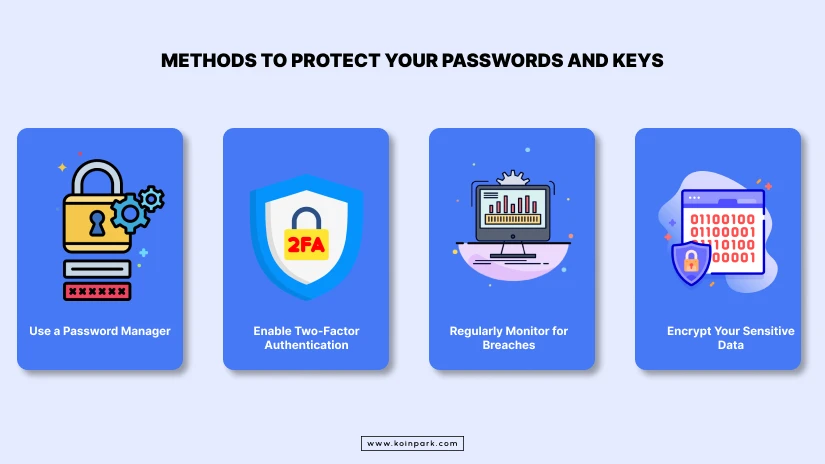
- Use a Password Manager: Store your passwords securely in a password manager that encrypts your data. This allows you to use long, unique passwords for every site and service without the hassle of remembering them all.
- Enable Two-Factor Authentication: Whenever possible, use two-factor authentication (2FA) with a USB key or a mobile app. Avoid SMS-based 2FA, as it can be intercepted.
- Regularly Monitor for Breaches: Use tools that check if your credentials have been exposed online due to hacking or data leaks.
- Encrypt Your Sensitive Data: Store important documents like seed phrases in an encrypted format, whether locally on your device or in the cloud.
Bottom Line
Protecting your cryptocurrencies and other blockchain assets requires a proactive approach. By expecting scams, securing your devices, diversifying your storage, and safeguarding your passwords, you can significantly reduce the risk of losing your digital assets. Remember, in the crypto industry, your security is only as strong as the precautions you take.
Stay informed, stay cautious, and keep your investments safe.